I pulled out the last of them with the point of a rock climbing pick.
The dirt was hard– their stems thick as rhubarb.
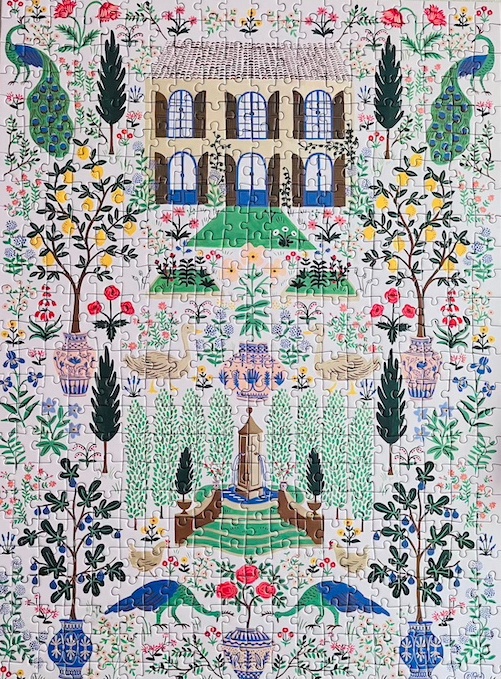
Then it rained for five days straight. Bastard Cabbages returned, invading my sweet garden, their leaves spreading wide like skirts of French court gowns.
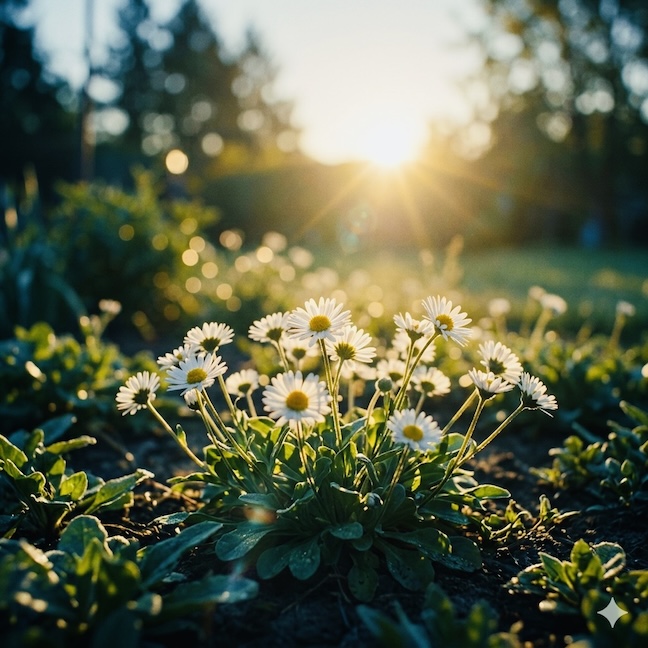
But such extravagance left little room for daisies, snapdragons, and sweet peas started from seed.
I carved out a space around the tiny flowers. They, too, needed light and air.
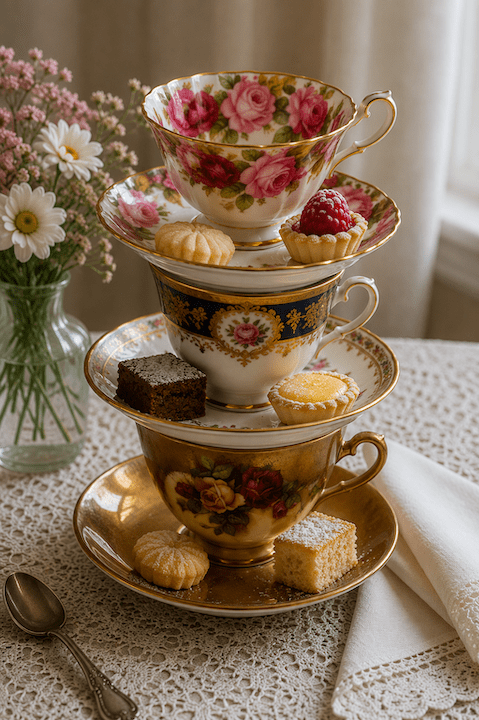
She looked very much like the Queen Mother– not only in her coloring but in the way she dressed.
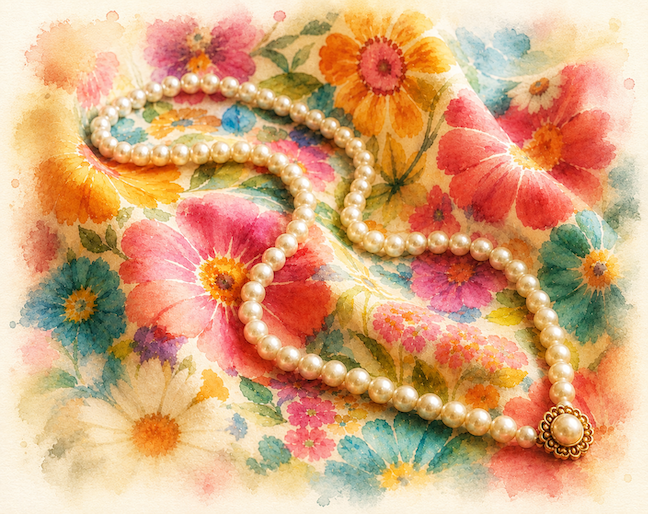
Heavy silk dresses, a string of pearls, a brooch pinned neatly below her neckline.
She was always prim and proper, her expression composed, though it softened into a lovely smile when we sang “Happy Birthday,” when she beat me at checkers, and especially when she offered a slice of lemon meringue or apple pie, still warm from the oven.
One day she wore a dress my mother had sewn for her from fabric covered in flowers the color of those in the flower power advertisements.
I looked at her in wonder.
“Wild flowers!” I declared.
She giggled then– a light, girlish sound I had never heard before.
For an instant, I caught sight of someone other than my dutiful Nana:
a young woman bright with life, still there beneath the silk dresses and pearls.
It was enchanting!
The following passage was in a note Nana once wrote to me:
Maiden, that read’st this simple rhyme, Enjoy thy youth, it will not stay; Enjoy the fragrance of thy prime, For O! it is not always May! by Henry Wadsworth Longfellow It is Not Always May
I never asked why. It was in her Dutch blood, her Calvinistic sense of simplicity– upright, unadorned.
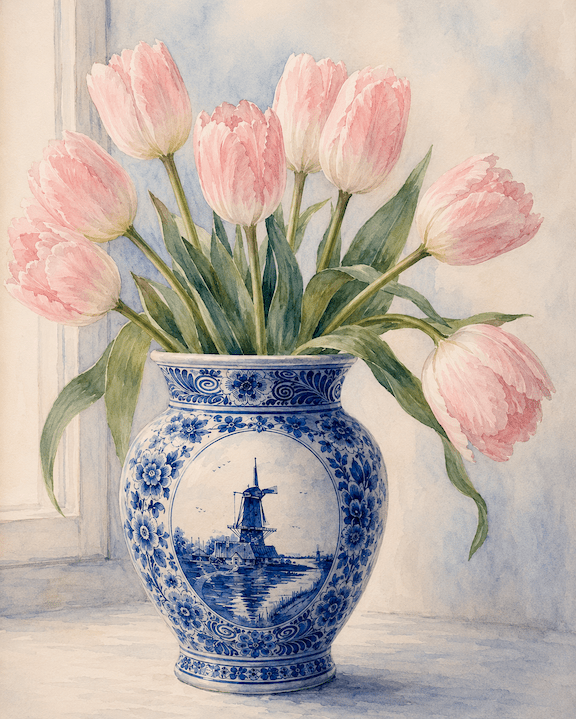
On Mother’s Day there were always tulips: pale pink, set in her Delft vase, its blue-and-white surfaces catching the light, holding it quietly beneath the stems.
I tried, sometimes, to improve upon them– those lavish arrangements– variegated tulips, blue hydrangea, white roses, small bright globes of yellow– but she would only smile, as if to say: not this.
She wanted the tulips alone.
Now, after many years and other flowers– peonies, lilies, anemones, even the careful making of paper petals–
I pass a market stall and stop.
I bring home tulips, pale pink, and set them in her vase.
In the quiet of the room they open, and she is there.
I love to behold beauty in all its forms, especially what the world offers freely… Rose-tinged sunrises, a dragonfly resting on my hand, cats’ eyes at dusk, stones made smooth enough to skip.
But there is something nearly sacred in making: entering that quiet realm where the hands know what the mind cannot utter.
Nothing compares to the birthing of my children, those ultimate acts of making.
Still I take comfort in smaller labors: strands of embroidery floss, skeins of wool, tubes and palettes of paint.
And the ability to shape them into something that lasts– sometimes admired, worn or passed on, carrying the warmth of the hands that made it.