My maternal aunt was the eldest child of Depression parents.
She could make something beautiful out of very little.
Her father’s worn wool suits became braided rugs. Outgrown dresses and shirts became pieced quilts. Old sweaters unraveled for mittens and toques.
When she came to visit, she gathered up my daughters’ too-small clothes into her lap with delight, then sat at the kitchen table with her small scissors and seam ripper, taking each garment apart with the care of a surgeon.
When she was done, baby jars of buttons lined my shelves– sorted by color and size.
There were neat folds of fabric, bundles of lace, zippers saved for later.
Then came sweet afternoons spent sewing rag dolls beside her, with little dresses to match.
But when the remnant basket was empty, she would begin looking toward our closets, imagining what else might be cut down, remade.
Nothing was entirely safe.
That was usually when it was time for her to go home.
Now, years later, I find myself sitting by the sewing machine with a seam ripper in hand, saving buttons from old clothes–
the old baby jars still full on the shelf, still being used.
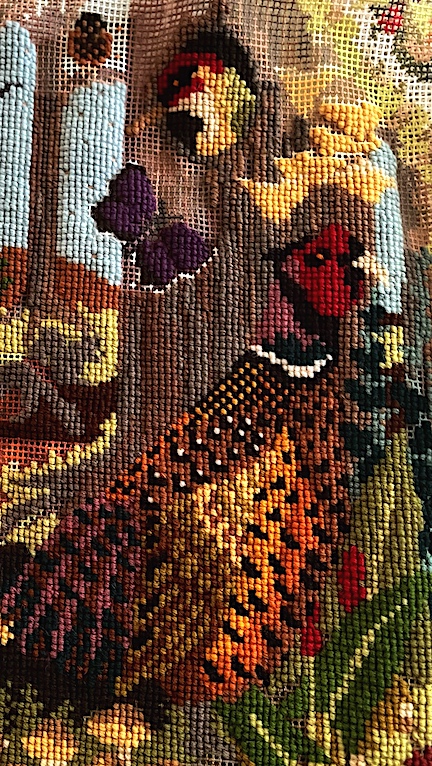
In verdant glades where pine woods dense did rise, Beneath a canopy of emerald hue, There dwelt the pheasants, nye with watchful eyes, Their clucking whispers soft as morning dew.
Among the shadows, hidden from my gaze, Their presence marked by crimson, fleeting bright, Elusive specters in the sun’s faint blaze, They danced like phantoms in the fading light.
A childhood spent in backyard’s wistful play, I lingered near the forest’s secret veil, With heart that yearned for just a special day, When pheasants bold would cross my playful trail.
Though glimpsed but rarely, they forever stay, In dreams and echoes of my long-gone youth, Those pheasants, shy, in twilight’s soft array, A symbol of a time of joy and truth.
Whenever I see an image of a pheasant, I can’t help but smile! It takes me back to the landscape of my youth where I was so happy playing in the woodlands near my home.
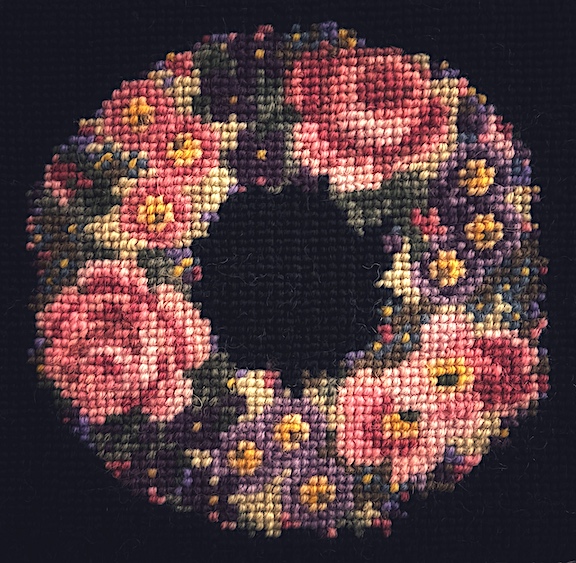
In a tapestry of threads once left astray, Lies the beauty of a wreath in shades arrayed. With remnants of wool, a canvas they adorn, A masterpiece born from what others scorned.
Each stitch a story of resilience and grace, From discarded strands, a new life takes place. In every cross and turn, a tale is spun, Of transformation from what was undone.
What once lay idle, now blooms with delight, A wreath of colors, a symphony of light. So, the joy of creating from what’s been cast away, Turning leftovers into art, day by day.
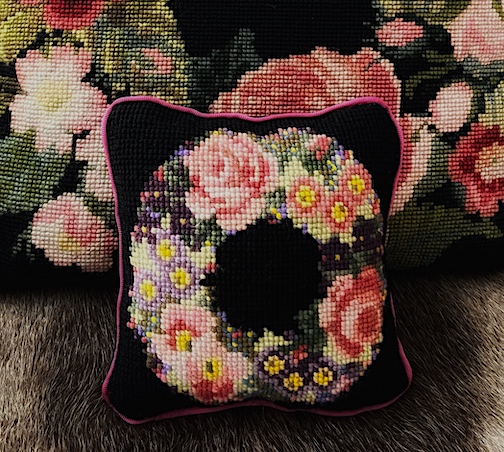
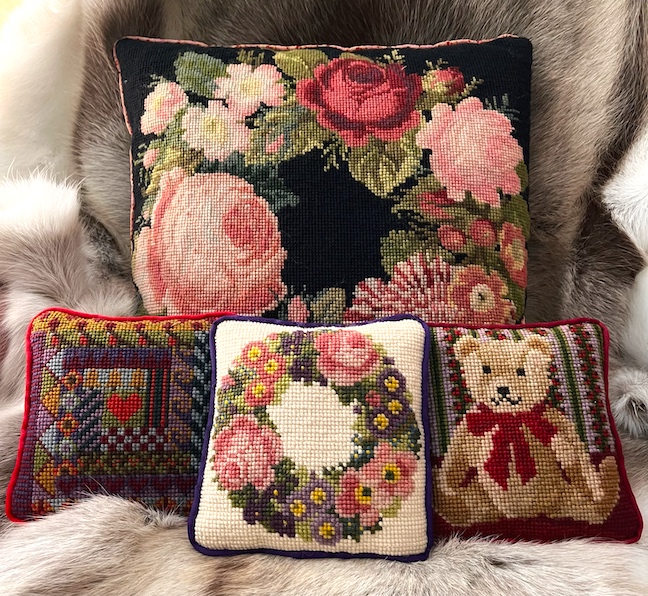
I wanted to stitch a needlepoint project using leftover tapestry wool from past efforts. This wreath was worked using a combination of Appleton, Paternayan (two strands only), and Elizabeth Bradley yarns. I did not have all the color matches for the pattern so I had to create my own colorway. I plan to sew it into a pillow with rose velvet ribbon piping and a black velvet backing.
I really like creating something beautiful from scraps, be it a needlepoint canvas or a quilt. These end up being my favorite pieces!
All big things come from small beginnings. The seed of every habit is a single, tiny decision. But as that decision is repeated, a habit sprouts and grows stronger. Roots entrench themselves and branches grow. The task of breaking a bad habit is like uprooting a powerful oak within us. And the task of building a good habit is like cultivating a delicate flower one day at a time. by James Clear, Atomic Habits
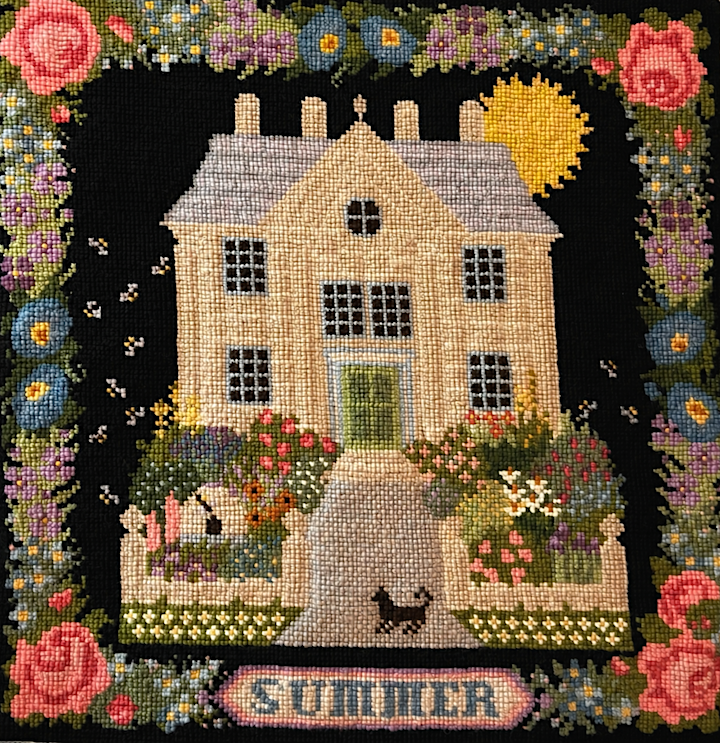
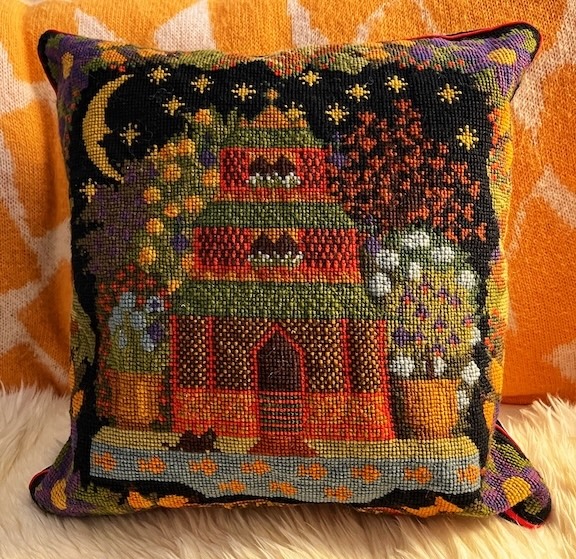
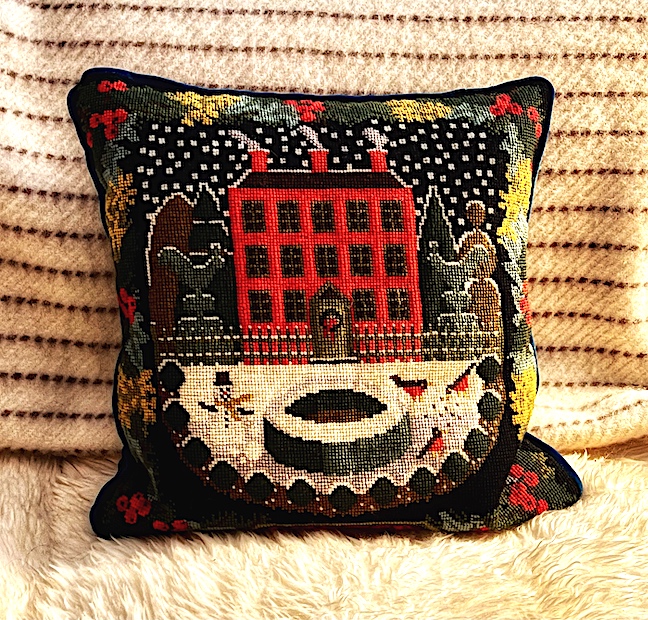
I am happy to report that I have finally finished my last needlepoint project. It took me an entire year to stitch twelve canvases (and that included sewing them into pillows). I had intended to try another self-imposed creative challenge in another medium such as painting versus textiles, but the habit of picking up a needlepoint canvas is so ingrained in me, that I cannot and now do not want to give it up! Thank you, James Clear, for starting me on this creative challenge journey.
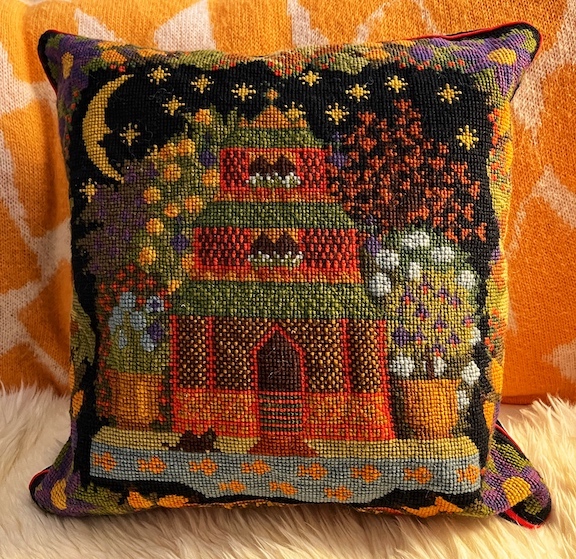
Six months of needlepointing, each day a steady hand, With Victorian cross stitches, my large opus planned. Thousands of small stitches, so meticulously placed, And twenty hues of tapestry wool carefully spaced.
On this canvas, my heart is stitched in every row, A gift to my daughter, a treasure on her bestowed. I hope she will hold it close and feel the love it bears, My offering of this hedgerow to cherish and to share.
This needlepoint pillow was planned as a gift for my daughter. So glad to have completed it! 🧡
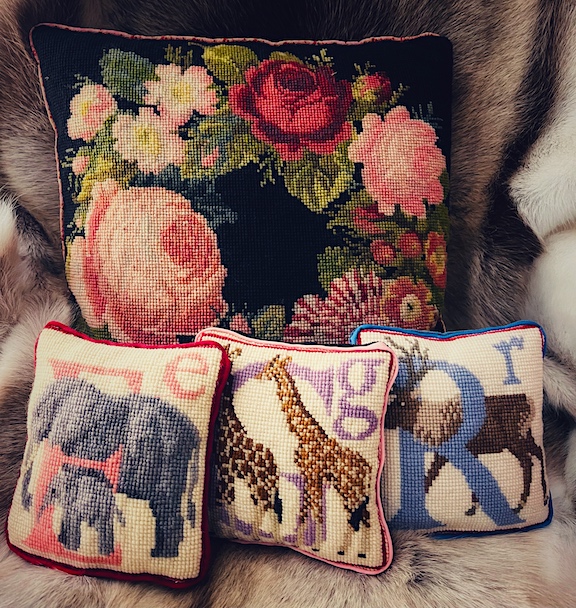
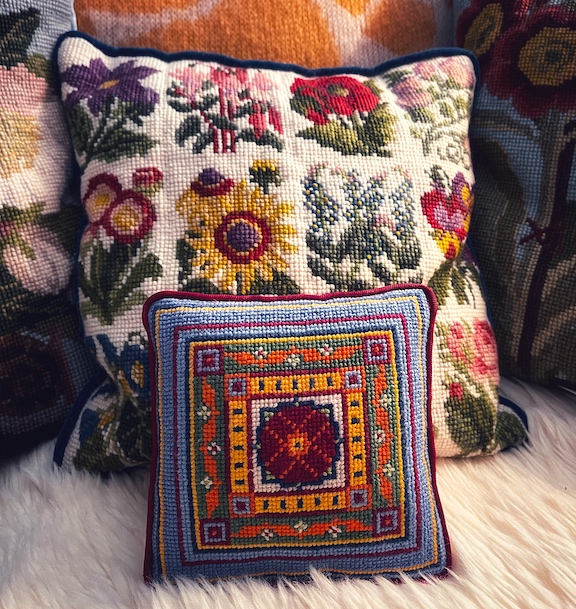
In stitches and threads, a year’s toil unfurled, Ten needlepoint pillows, each a gem in the world. With wool and with velvet, with silk piping so fine, Crafted with love, each design to enshrine.
Alphabet treasures that children adore, Alligators, elephants – snakes galore! Gentle giraffes and bears wearing red bows, Falcons, hedgehogs, and ducks with no toes.
As gifts were given, joy filled the air, Tears of delight, expressions so rare. But scarcely had they nestled in hand, The chorus erupted, a unanimous demand.
“We want more!” they cried, their voices a cheer, For the beautiful stitching, oh so dear! So back to the needles, with passion and grace, More pillows to make for their hearts’ embrace.
I have two large needlepoint canvases almost finished, and had planned to take a break from needlepoint to concentrate on my animal and bird watercolor paintings. But now, we shall see!
Changes that seem small and unimportant at first will compound and turn into remarkable results if you’re willing to stick with them for years. – James Clear
I began the needlepoint project, pictured above, in October. It is entitled Hedgerow, from Elizabeth Bradley’s Natural History Collection. After I started working on it, I realized that it would take me about a year to complete due to the size of the canvas, the number of color changes (24 different colors of tapestry wool!), and the amount of time I had to devote to it – typically on a catch-as-catch-can approach. It usually takes me about three months to finish a needlepoint, so this one was a bit daunting by comparison. I knew I had to just get on with it. The needlepoint wasn’t going to get done by itself, but I wasn’t sure how to speed up the process.
However, last month I read James Clear’s book, Atomic Habits, after which I decided to make some changes to my morning routine. I now get up an hour earlier every morning to work on my needlepoint. The needlepoint canvas and wool are laid out on the sofa ready for me to pick up in the morning so I am able to start working right away – no set-up time is required. This activity may or may not be accompanied by a podcast or new music stream or just thinking about how I am going to structure my day to get the tasks done on my to do list.
Although it is still early with my new habit formation, I have to report that I am thrilled with my progress! I only complete a tiny square of stitches each day but I can see that over the last few weeks these tiny squares are accumulating nicely and the textile will, indeed, be completed by the summer – probably four months earlier than my projected finish date! Yay! (I will still have to sew it into a pillow, but that is another story.)
I have so many textile, studio art, and home improvement projects in the works that I have been somewhat frustrated (more like overwhelmed) wondering how I am going to get them all done. This needlepoint project is only one positive data point, but I plan to apply this process to the other projects and I am looking forward to the results!
Upcycle definition: reuse discarded objects or material in such as way as to create a product of a higher quality or value than the original.
Last summer, I made a last minute purchase of a blouse to wear at a family celebration. Although I liked the fabric, it never really fit me properly despite my best tailoring efforts to salvage it. Yesterday, when I needed a black bag to go with an outfit, I thought it was time to put the blouse to a better use. I am happy with the result and thought I would share some upcycling and sewing tips:
Source the fabric for your project from your clothes or family and friends’ donation boxes, garage sales, and thrift stores. Look for the largest sizes to yield the most fabric yardage.
Be resourceful and don’t limit yourself to just clothing: wraps, and even sheets. drapes, and tablecloths can work well.
Find a simple sewing pattern that will be easy to modify. I had found Simplicity pattern #2685 on Etsy. It required more fabric than what I could harvest from the blouse, so I decided to use a different, but complementary, fabric from my quilt stash for the lining. The lining fabric I selected wasn’t quite wide enough, but by decreasing the size of the lining pleats by a little, I got it to fit.
Be creative by adding embellishments such as buttons and piping on the outside placard to make the bag truly your own. In this case, the fabric was so busy, I decided to eliminate the decorative placard all together.
Don’t be afraid to mix and match pattern pieces from the various styles within the pattern package to meet your needs. I usually lengthen the straps, add an interior pocket for my phone, and attach a carabiner for my car and house keys.