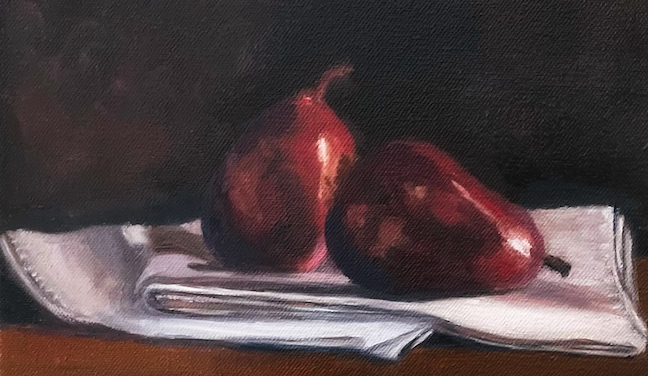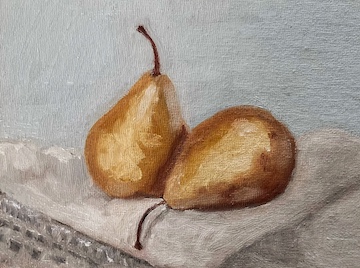
The fruit tree heard that the Bhagavad Gita recommends surrendering the fruits of action to God and so he gently dropped his pears into Mother Earth’s lap.
Because he did so, pear seeds made the world much more pear-treed.
from Bhagavad Gita: Chapter 5
An Italian proverb states, “in bocca chiusa non cade pera,” – a pear will never fall into a closed mouth. But, to me, there is something about the shape, color, and texture of a pear that makes it almost too beautiful to eat!
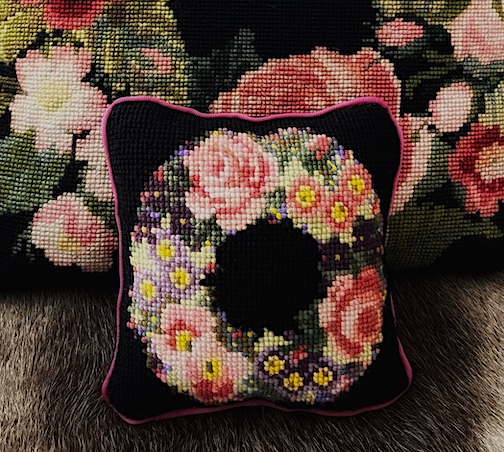
In a tapestry of threads once left astray, Lies the beauty of a wreath in shades arrayed. With remnants of wool, a canvas they adorn, A masterpiece born from what others scorned.
Each stitch a story of resilience and grace, From discarded strands, a new life takes place. In every cross and turn, a tale is spun, Of transformation from what was undone.
What once lay idle, now blooms with delight, A wreath of colors, a symphony of light. So, the joy of creating from what’s been cast away, Turning leftovers into art, day by day.
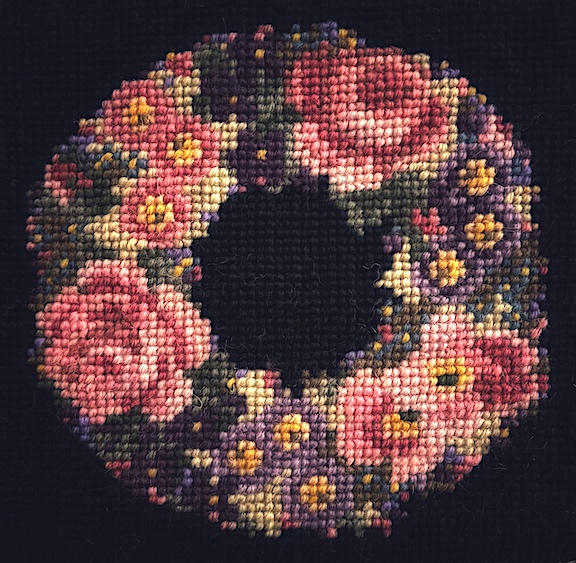
I wanted to stitch a needlepoint project using leftover tapestry wool from past efforts. This wreath was worked using a combination of Appleton, Paternayan (two strands only), and Elizabeth Bradley yarns. I did not have all the color matches for the pattern so I had to create my own colorway. I plan to sew it into a pillow with rose velvet ribbon piping and a black velvet backing.
I really like creating something beautiful from scraps, be it a needlepoint canvas or a quilt. These end up being my favorite pieces!
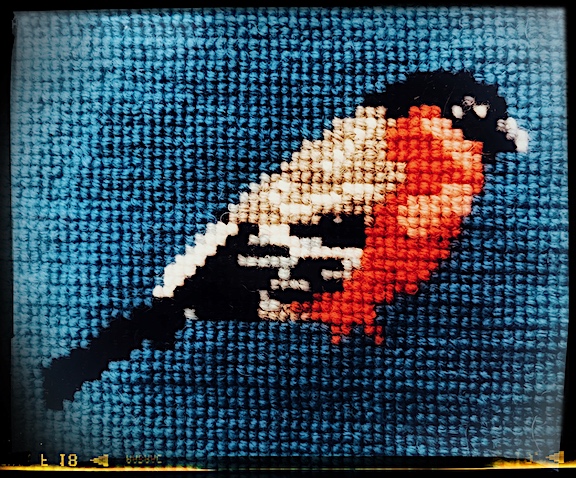
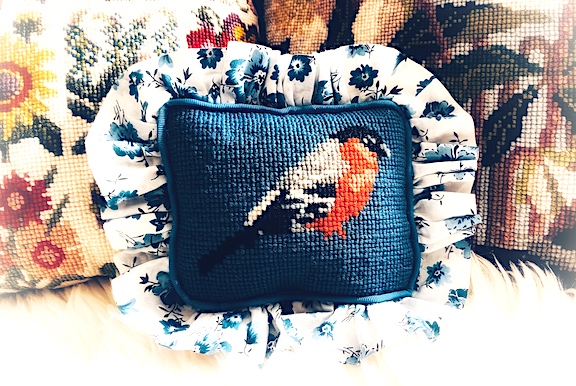
In shadows cast by judgment’s weight, I find myself, a bird, sedate. Dreams clipped by critical gaze, An anchor, heavy, in life’s maze.
Each flight of joy, a tentative dance, Held back by words, a stifling trance. But deep within, a yearning stirs, For freedom’s song, no longer deferred.
To cut the chains, to break away, From mainstays holding, day by day. To soar anew, with wings unfurled, Towards dreams embraced, in a boundless world.
So let me sever, let me fly, Bid farewell to judgement’s sigh. For in the vastness of the sky, I’ll find my joy, no longer shy.
Today I noticed that the birds are back in my yard. Spring has come once again!
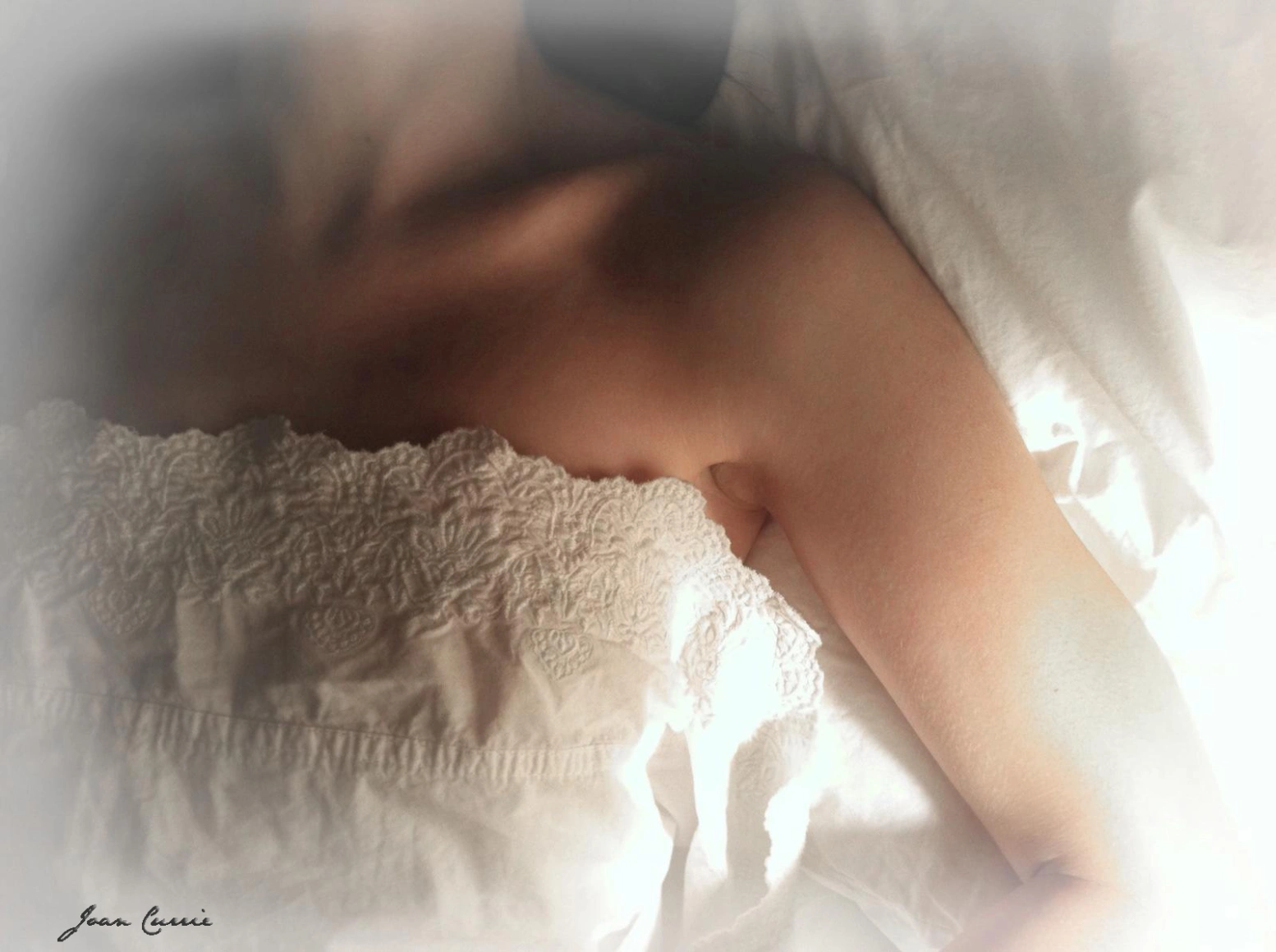
Another day awakens, sunlight gently streams, Yet, I lie entangled in elusive dreams. Mountains of tasks, a daunting array, Head heavy with the weight of the pending day.
The dawn whispers of responsibilities vast, A symphony of to-dos, shadows cast. Bed’s comfort tempts, a refuge to stay, But, the world outside demands its sway.
The ache in the head, the burden of thought, Projects loom, battles to be fought. In the warmth of the sheets, a plea is said, To linger longer, and avoid the day ahead.
Ah! If only I could luxuriate in bed for a few more minutes!
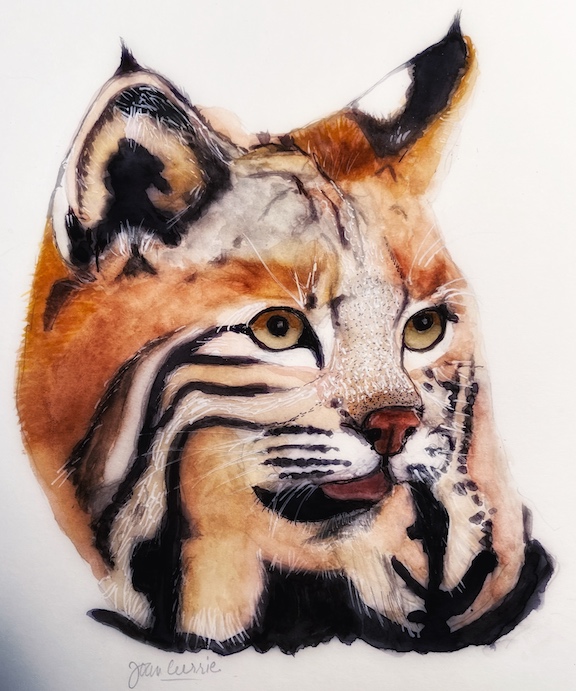
In the moonlit glade, a lynx appears, Fur-tipped ears, green-gold eyes quelling fears, A guardian wise, like an androsphinx’s grace, Yet, ponder, do we anthropomorphize his face?
All-knowing aura, mystique in his stare, Yet, does he ponder life with a thoughtful air? Do we project our musings, a human reflection, Onto the lynx, seeking a shared connection?
In the silent forests, mysteries untold, Does the lynx ponder more than hunger bold? Hissing and yowling and screams in the night, A startling assertion of nature’s might.
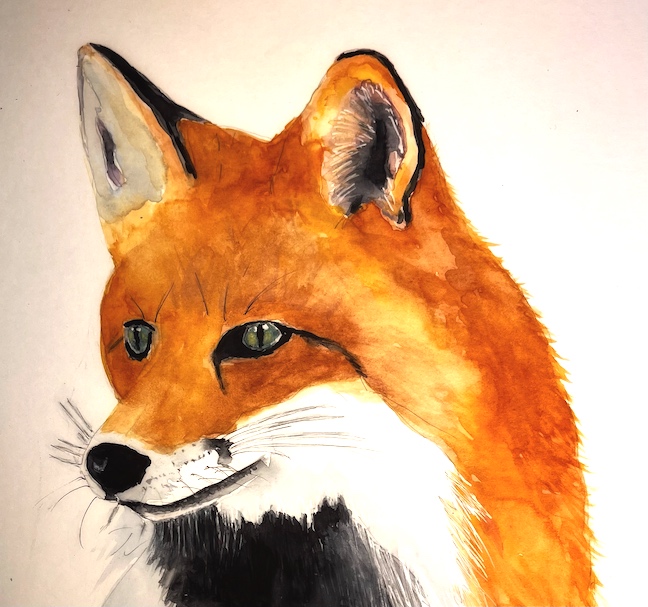
In winter’s embrace, a lonely man found cheer, A red fox came, a friend so dear.
Exquisite fur, eyes of blue-green grace, Shared scraps, forming a bond in that quiet space.
Yet, in reaching out, a truth unfolds, Wild and untamed, as nature holds.
Teeth bared, a lesson swiftly learned, A cunning companion, loyalty unearned.
I found it difficult to teach my children to be wary of wild animals when so many children’s books, cartoons, and movies – especially Disney movies, portrayed them as cute and cuddly creatures.
Photographed by Joan Currie – The Botticelli Drawings Exhibit, Head of a Youth, Roman, 2nd century AD, marble
Ode to Cutting Off a Nose by Joan Currie
There was a young man who was vain, His self-absorbed nature was plain. Despite all the money he’d spend, No one thought of him as a friend.
He was vengeful, spiteful, and mean, People say he was rarely seen. His mother was wary of him, His future – decidedly grim.
One day when he looked in the mirror, He pronounced that he looked rather queer. So he cut off his aquiline nose, And fed all the parts to the crows.
As I was examining the marble Head of a Youth at the Botticelli Drawings exhibit at the Legion of Honor in San Francisco, I thought of the expression, “cutting off one’s nose to spite one’s face,” as well as Vincent van Gogh cutting off his ear, and the ominous “Wheat Field with Crows,” one of van Gogh’s last paintings executed in 1890 before his death. The above poem was born out of that Joycean stream-of-consciousness.
I wonder what other people think when they look at great works of art? Who knows, but it could be very interesting!
In the peaks where snow doth lie, A creature graced with silent stride, Snow leopard roams beneath the sky, In the realm where frost abides.
With fur of silver, spots of night, Its gaze, ice blue, a mystic sight, Amongst snow-capped mountains high, A guardian beneath the moonlight.
Once a child of that mountain air, A woman now, distant and fair, From the village, she did part, Leaving behind a heavy heart.
In dreams, she hears the snow’s soft call, A longing echoes through the hall, Her spirit yearns for frozen grace, To wander in that wild embrace.
The snow leopard, a silent guide, Through peaks where memories abide, Its eyes like crystals, piercing cold, A tale of nature’s beauty told.
The woman, haunted by the past, Desires the mountains, free at last, To return to where her soul belongs, Amidst the snow, where it prolongs.
Through valleys deep and rivers wide, Her heart retraces steps beside, Towards the peaks, she yearns to climb, Reconnect with frozen time.
Oh, snow leopard with eyes so bright, Guide her through the frigid night, To find her way, to nature’s lore, To the mountains she adored once more.
The northern landscapes that shaped my early years now seem like distant dreams. I wish for a winter’s day, especially in the late afternoon as the sun is setting, when the snow is infused with soft shades of white, blue, lavender, and rose.