Go confidently in the direction of your dreams! Live the life you imagined. Henry David Thoreau
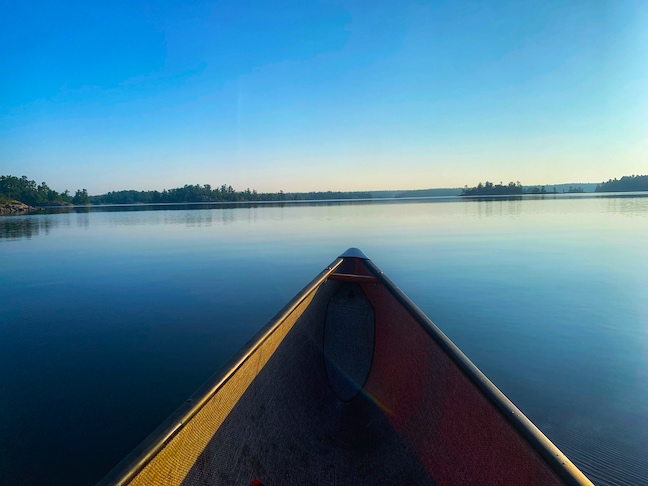
I am in the process of creating a wish list for this summer. At the top of it – to canoe on a northern lake. In recent years, I have substituted a kayak for a canoe. But, my heart still longs to paddle a canoe at dawn with a quiet j-stroke – on the upstroke, instead of lifting the paddle blade out of the water, it stays in the water. Magical!
In verdant glades where pine woods dense did rise, Beneath a canopy of emerald hue, There dwelt the pheasants, nye with watchful eyes, Their clucking whispers soft as morning dew.
Among the shadows, hidden from my gaze, Their presence marked by crimson, fleeting bright, Elusive specters in the sun’s faint blaze, They danced like phantoms in the fading light.
A childhood spent in backyard’s wistful play, I lingered near the forest’s secret veil, With heart that yearned for just a special day, When pheasants bold would cross my playful trail.
Though glimpsed but rarely, they forever stay, In dreams and echoes of my long-gone youth, Those pheasants, shy, in twilight’s soft array, A symbol of a time of joy and truth.
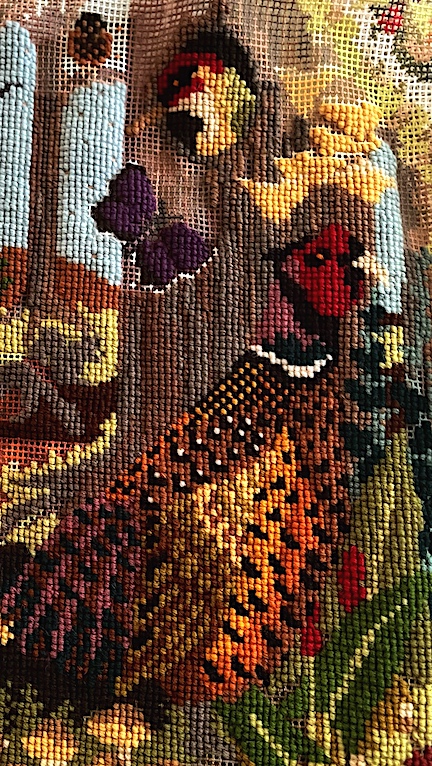
Whenever I see an image of a pheasant, I can’t help but smile! It takes me back to the landscape of my youth where I was so happy playing in the woodlands near my home.
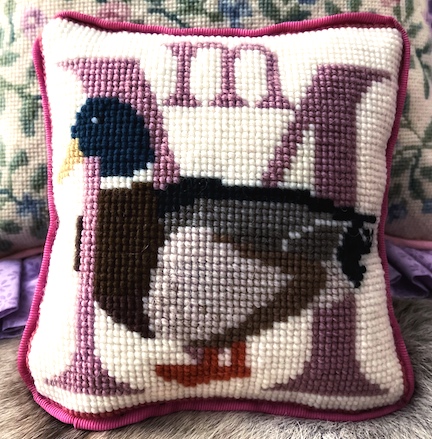
In days of yore, in times Victorian fair, By the pond’s edge, with crisp, clear air, We children gathered, hearts aglow, To feed the mallards crumbs in tow.
Their emerald heads, with sheen so bright, Glistened like jewels in morning light. Majestic creatures, in green adorned, A sight to cherish, a scene to mourn.
In summer’s warmth, they swam with grace, Dancing on water, a joyous embrace. Their quacks, a chorus, a playful cheer, Echoed sweetly, ringing near.
But winter came with chilly nights, A frozen pond, no duck took flight. The waters stilled, the mallards caught. In nature’s grasp, their freedom sought.
We’d rush to save them, break the ice, With tender hands, a sacrifice. To free their wings to let them fly, Underneath the frigid sky.
Those emerald heads, with memories tied, To days of laughter, when time would bide. Still call to mind a youth so grand, With mallard ducks, and crumb-filled hand.
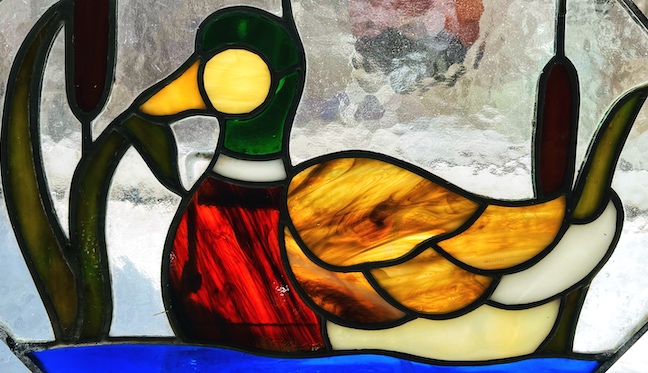
I remember a kindly police officer who helped us children free the mallard ducks stuck in the frozen water of the neighborhood pond. It was amazing that the ducks survived!
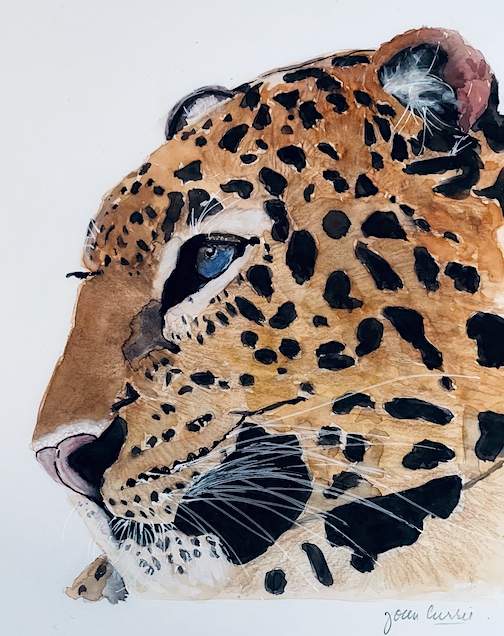
There, in the twilight’s gentle hold, A vision rare, a sight untold, A jaguar sprang from leafy shade, Its presence fierce, my steps delayed.
With eyes of blue, like summer skies, It met my gaze with wild surprise, A flash of light in twilight’s gloom, A piercing fire, a sapphire bloom.
Upon its coat, the rosettes danced, With markings clear, my heart entranced, Not leopard’s spots, but nature’s art, The jaguar’s strength and mystic heart.
It moved with grace, a specter bright, Through verdant halls of fading light, In silent awe, I stood alone, To witness what the wild had shown.
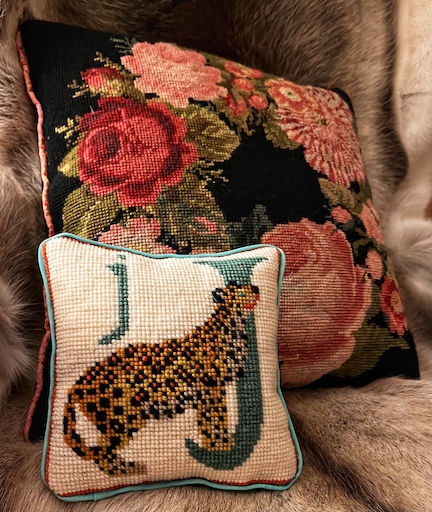
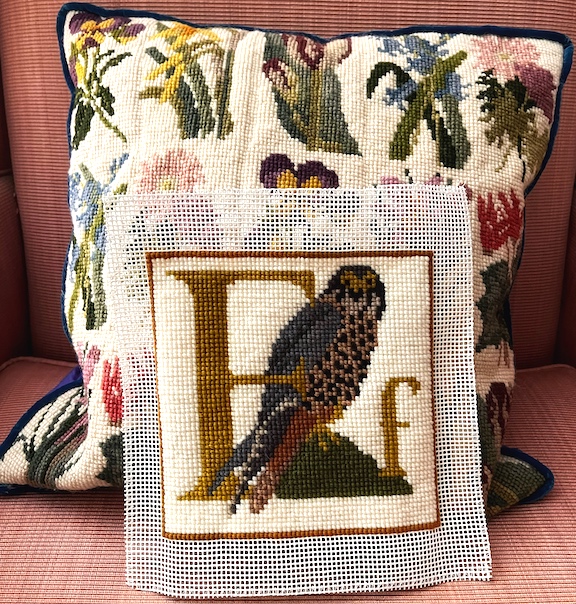
When I was very young, my knowledge of animals: mammals, birds, fish, reptiles, and amphibians, was limited to identifying them in picture books – mostly associating the name of the creature with the first letter of its name, e.g. “J for Jaguar.” Although I studied them in biology class and watched a number of National Geographic and Nature documentaries over the years, my keen interest in animals came to me only recently. I am completely besotted with them now!
I caught this morning morning’s minion, king- dom of daylight’s dauphin, dapple-dawn-drawn Falcon, in his riding Of the rolling level underneath him steady air, and striding High there, how he rung upon the rein of a wimpling wing In his ecstasy! then off, off forth on swing, As a skate’s heel sweeps smooth on a bow-bend: the hurl and gliding Rebuffed the big wind. My heart in hiding Stirred for a bird,—the achieve of; the mastery of the thing!
Brute beauty and valour and act, oh, air, pride, plume, here Buckle! AND the fire that breaks from thee then, a billion Times told lovelier, more dangerous, O my chevalier!
No wonder of it: shéer plód makes plough down sillion Shine, and blue-bleak embers, ah my dear, Fall, gall themselves, and gash gold-vermillion.
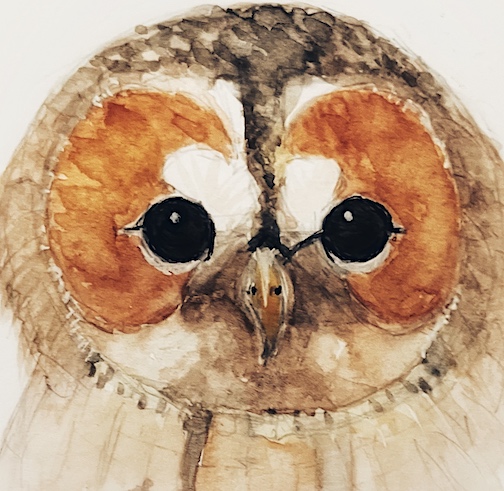
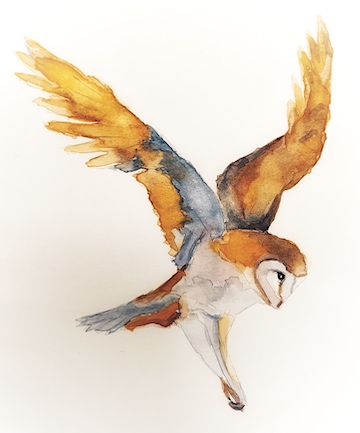
I have become fascinated with birds of prey in the last few months – the variations of hooked beaks and talons are particularly interesting. I will share my paintings once the raptor series is complete.
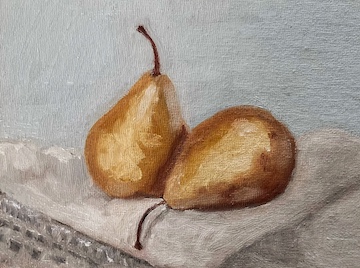
The fruit tree heard that the Bhagavad Gita recommends surrendering the fruits of action to God and so he gently dropped his pears into Mother Earth’s lap.
Because he did so, pear seeds made the world much more pear-treed.
from Bhagavad Gita: Chapter 5
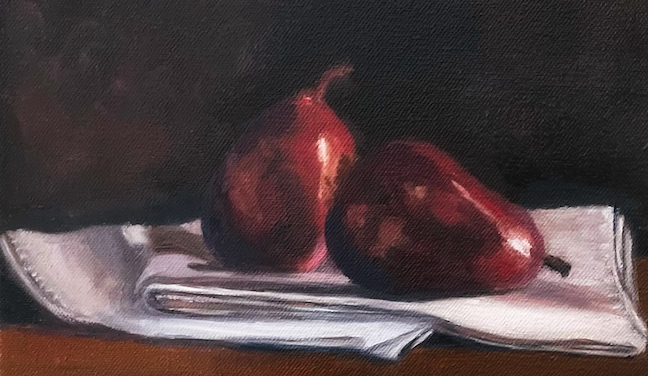
An Italian proverb states, “in bocca chiusa non cade pera,” – a pear will never fall into a closed mouth. But, to me, there is something about the shape, color, and texture of a pear that makes it almost too beautiful to eat!
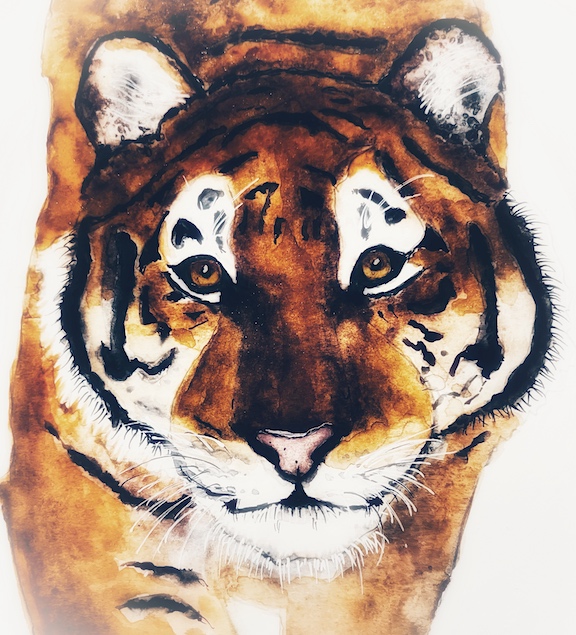
Tyger Tyger, burning bright, In the forests of the night; What immortal hand or eye, Could frame thy fearful symmetry?
In what distant deeps or skies. Burnt the fire of thine eyes? On what wings dare he aspire? What the hand, dare seize the fire?
And what shoulder, & what art, Could twist the sinews of thy heart? And when thy heart began to beat. What dread hand? & what dread feet?
What the hammer? what the chain, In what furnace was thy brain? What the anvil? what dread grasp. Dare its deadly terrors clasp?
When the stars threw down their spears And water’d heaven with their tears: Did he smile his work to see? Did he who made the Lamb make thee?
Tyger Tyger burning bright, In the forests of the night: What immortal hand or eye, Dare frame thy fearful symmetry?
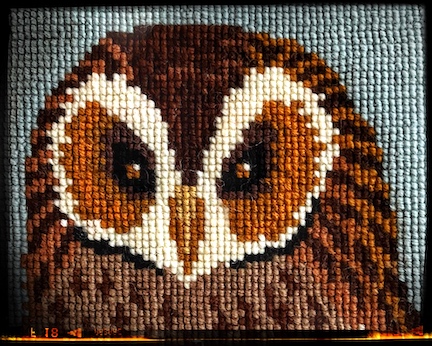
I love to listen to audiobooks while I needlepoint or paint with watercolors. This week’s book by John Lithgow, The Poet’s Corner: The One-and-Only Poetry Book for the Whole Family, gave me six and a half hours of pure bliss! The author included recitations, biographical information, and analyses of over forty poets’ content, style, and language. William Blake’s “The Tyger” poem was included in the list and inspired my blogpost.
P.S. I continued thinking about tigers and wild cats in general these last few days and when I came across Rudyard Kipling’s book, Just So Stories, I couldn’t resist rereading a story from my childhood, “How the Leopard Got His Spots.” You might enjoy it, too!
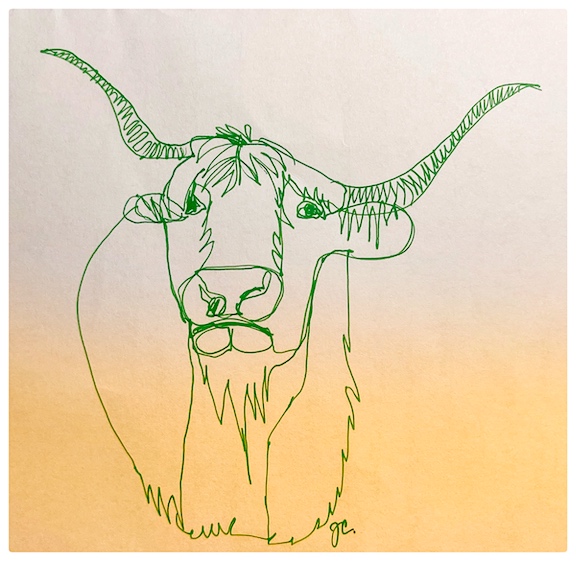
As a friend to the children commend me the Yak. You will find it exactly the thing: It will carry and fetch, you can ride on its back, Or lead it about with a string.
The Tartar who dwells on the plains of Tibet (A desolate region of snow) Has for centuries made it a nursery pet, And surely the Tartar should know!
Then tell your papa where the Yak can be got, And if he is awfully rich He will buy you the creature—of else he will not. (I cannot be positive which.)
After Church when I was a child, my father would often take me and my siblings to visit the outdoor zoo in a park near where he grew up. The yaks‘ enclosure was a curiosity – I could never understand the game they played wherein the bigger yak climbed on top of the smaller one, and the smaller one never got a turn to do the same.
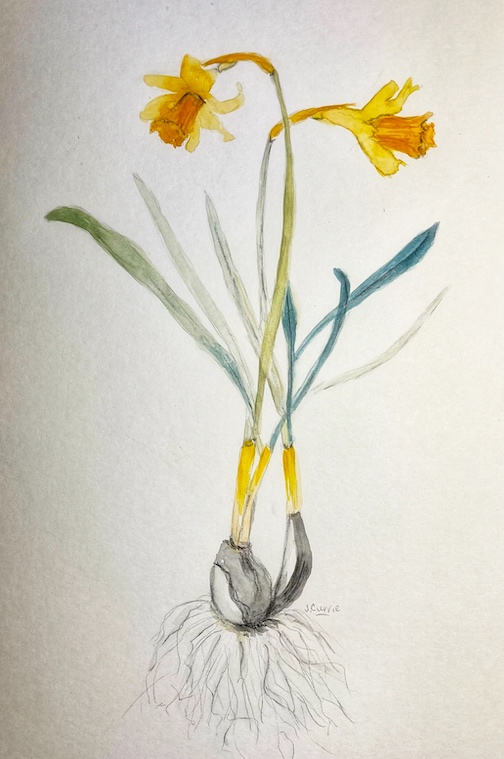
In fields of gold where daffodils dance, Their beauty shines in a fleeting glance. But beneath the soil, where roots entwine, Lurks a truth that’s less than divine.
For hidden from view, in the earth’s embrace, Lie roots that tell of a different fate. Though petals gleam in the sun’s warm light. The roots betray a darker sight.
So too, do some, in the world’s gaze, Appear as beauty in myriad ways. But beneath the surface, unseen to most, Lies a truth that’s harder to boast.
This morning, I noticed that the squirrels had uprooted my daffodil plants. As I gently pressed them back into the soil, I was struck by the contrast between the lovely, sunny blooms on top and the fine, twisted roots emerging from the bulb at the bottom.
I thought about how some people, too, present themselves as the picture of perfect beauty and loveliness but deep inside may lie a darker story – be it of heartache, grief, illness, or even a darkness of the soul.


 Satin & Sand